
Experiments in Trolling Society
The Impossible Shop

I recall reading about an ancient culture, some time ago, which utilised the power of free-thinkers and creative types, by commissioning them to troll it, essentially, lest it begin to take itself too seriously. In other words, the wise leaders of this society understood the danger posed by collectivism, and the madness that often ensued, but to which the population itself were invariably blind. These free-thinkers, therefore, whose task it was to actively mock and provoke the herd, functioned as a kind of insurance policy, or safety valve, alerting society to the danger posed by itself, to itself, due its inherent blindness. That is to say, the inability of the masses to see themselves objectively.
Unfortunately, modern society has no such safety valve, or at least not one that was commissioned by the government. It does, however, have “outsiders,” which is a concept that I can personally relate to, having read Colin Wilson’s seminal philosophical work, The Outsider. These outsiders have the ability to see society for what it is, precisely because they are outsiders. Or, equally conceivably, they are outsiders because they have the ability to see society for what it is. Either way, as one of them, and in deference to the spirit of “useful subversion,” from which my ancient counterparts acted, I took it upon myself to troll society.
I should make it clear, however, that I didn’t need to act in a contrived manner, or in a way that was out of character, in order to do this. Simply by remaining true to myself, and pursuing what I would have pursued anyway, I was able to fulfil my task. So whilst my actions may not have constituted “trolling,” in the strictest sense of the word, the fact that I consciously chose such a path, in defiance of social norms, was nonetheless effective in ruffling feathers, generating controversy, and generally calling society out on its bullshit.
The idea of opening a shop, through which I could sell a very niche range of merchandise, actually came from a radio interview that I did, during which we speculated on the public reaction to such a thing. In any case, to cut a long story short, the shop in question, which we called, “Woonani,” finally opened for business, last week. And until our doors opened to the public, for the first time, nobody had a clue what we’d actually be selling. We made doubly sure of that, even concealing the name of the shop, lest protesters or vandals attempted to scupper our grand opening.
The atmosphere outside was unsurprisingly jovial, prior to opening, as people gathered for their free Champagne and gourmet chocolates. Inside, however, a member of staff had just puked his guts up, fearing that he would be lynched. And with only minutes to go, before the doors were scheduled to be opened, my brother, Tom, texted me to say: “I’m sorry, Jay, but I can’t go through with this.”
What on earth, you may ask, were we selling? Well, a variety of things: Paintings and prints, from well-known artists; books, posters, mugs, clothing, movies, statues, figurines… Nothing, in fact, that other High Street stores weren’t already selling, or would have any objection to selling. “How can you remain so calm?” said Matthew, as the seconds ticked down.
“Because I’m doing what I love,” I told him, “and sharing what I love with others. Haters are not my concern.”
“No, not until one of them sticks a knife in your chest, they’re not.”
“Nobody is going to be sticking knives anywhere,” I assured him. “Are you ready?”
“No.”
“Don’t worry, this is gonna be hilarious.”
I stood back from the door, having flung it wide open, and then proceeded to raise the blind, to reveal the window display. “Welcome, welcome,” I said, as people began to file inside. Matthew, meanwhile, had already deserted his post, leaving me to manage the shop with Alice.
“He went out through the back door,” she informed me.
As I was contemplating what to do about this, I overheard the first of many expletives that I was destined to hear that day, amid gasps of shock and various discontented murmurings. Of course, nobody would have had a problem with any of the items on display, had they been displayed alongside other, unrelated items. No, their problem, their bewilderment, and their anger, stemmed from the fact that every item in the store followed a particular theme. And whilst even that theme was innocent enough, the fact that we were drawing so much attention to it, in such an obvious way, was evidently shocking to those who were used to pretending not to notice how utterly enchanting and beautiful little girls really were.
When challenged to explain myself, as I inevitably was, on numerous occasions, I simply asked whether anyone would have had a problem with me opening a store for cat lovers, or dog lovers, or which sold items related to the beauty of nature. And in the silence that typically followed, or in response to a “no,” I would point out that neither animals nor landscapes could realistically compete.
“I mean, look!” I exclaimed, for the umpteenth time, pointing to a famous painting of a little girl at the beach. “I realise that beauty is in the eye of the beholder, but dear God! I refuse to believe that I am of the same species as anyone who could honestly claim that this — that she — isn’t so exquisitely beautiful that it melts one’s heart.”
The level of criticism surprised even me. And whilst I wasn’t entirely sure why people were reacting in such an extreme manner, nobody gave me any reason to believe that they did, either. Certainly, there was nothing even remotely suggestive about any of the images or other items that we were selling. No, the simple truth was that they were reacting exactly how they’d been programmed to react, because they lacked the capacity to think for themselves.
Towards the end of the day, having sold fewer items than I would have hoped, I watched with curiosity as a young girl entered the shop, apparently on her way home from school. Whether she already knew what to expect or not, because somebody had tipped her off, I wasn’t sure, but the absence of a negative reaction — or any reaction — was refreshing. She simply browsed around, occasionally pausing to inspect something more closely, as if we were selling groceries. It wasn’t until I answered a question that she had, on the meaning of the word, ‘Woonani’, that the penny finally began to drop.
“Girl-love?” she queried.
“Yes, we are a store for girl-lovers; those who love girls.”
“Really?” she said, scanning my face for signs of insincerity.
Alice interjected: “How can you doubt that, sweetheart, given everything that you see around you?”
“But I’m a girl,” she replied, as if we didn’t know.
“Yes,” I said, “and we love you for it. Is that really so hard to believe?”
Alice then asked her whether she’d ever been bullied at school, or unfairly treated by adults.
“All the time,” she admitted.
“And so was I, when I was your age. Children go to school, almost expecting to be bullied. And then they come home, wondering what crap they’re going to have to deal with from their parents, who were the ones who sent them to school in the first place.”
“What’s your point?” she asked.
“Why is all of that considered normal, whereas love is considered abnormal? The way society spins it, there are those who want to hurt you, and there are those who want to get into your panties. But people like us… We simply don’t exist.”
“Even though we do exist,” I emphasised, “and we are everywhere.”
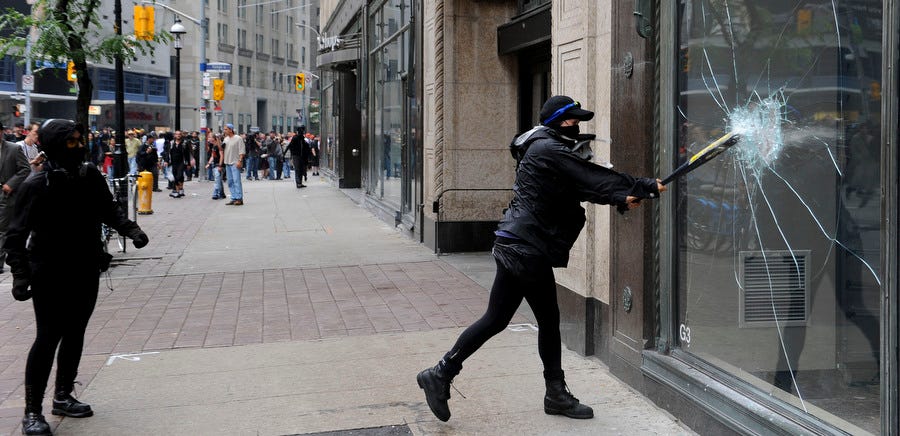
Our conversation was suddenly interrupted by the sound of glass shattering. Instinctively, the frightened schoolgirl covered her head, with her hands, and ran towards the back of the shop. The brick had landed just inches from where she’d been standing.
Whilst the attack wasn’t entirely surprising, it angered me that a child could have been injured, because of it. Certainly, the irony wasn’t lost, on any of us. No one could have anticipated, however, the extent to which that irony would grow, in the hours that followed. For the girl who we’d been talking to, whose name was Sam, confessed that she wasn’t just being severely bullied at school, but also abused at home. Somewhat predictably, therefore, having become aware of the reality of woonani, Sam immediately turned to us for protection, from the very society that supposedly wanted to protect her, from us.